

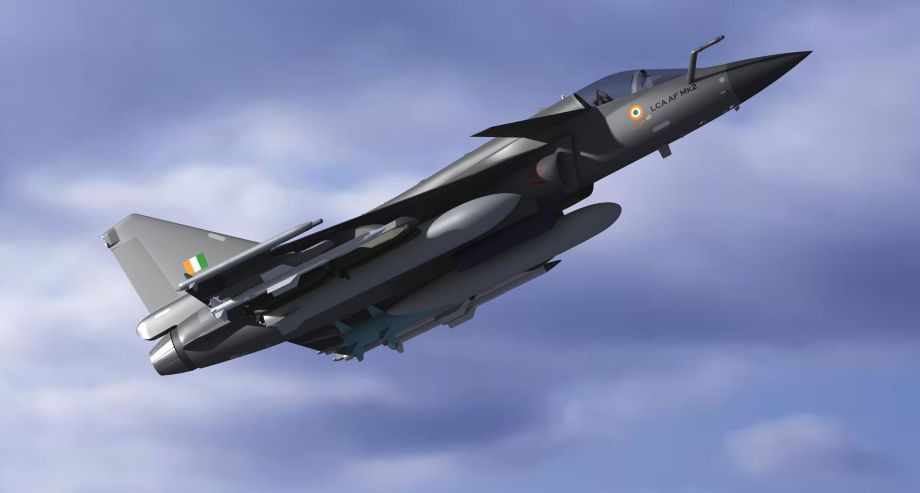
India is developing an advanced variant of its indigenous light combat aircraft, the Tejas Mk-2, designed to match the operational capabilities and combat performance of contemporary fourth-generation fighter jets in service globally, according to defence sources.
The redesigned fighter represents a significant leap from the Tejas Mk-1, which entered service with the Indian Air Force. The Mk-2 variant incorporates structural refinements, enhanced avionics integration, and improved aerodynamic efficiency to address operational feedback from frontline squadrons.
The Tejas programme, initiated by the Defence Research and Development Organisation (DRDO) and Hindustan Aeronautics Limited (HAL), has been India’s cornerstone indigenous combat aircraft project. The Mk-1 standard aircraft, powered by a single General Electric F404-GE-F2J3 turbofan engine, demonstrated India’s capability to design and produce a fighter jet without foreign development partnership, a milestone few nations have achieved.
The Mk-2 configuration addresses several operational requirements identified during Mk-1 deployment. Enhanced internal fuel capacity reduces dependency on external fuel tanks, extending combat radius and loiter time. Improved radar cross-section management through refined fuselage design and composite material integration strengthens survivability in contested airspace.
Avionics upgrades focus on sensor fusion and network-centric warfare capability. The Mk-2 is being equipped with an active electronically scanned array (AESA) radar, advanced electronic warfare suite, and multi-function display architecture compatible with India’s broader air defence ecosystem, including integration with ground-based air defence systems and airborne early warning platforms.
The fighter’s weapons integration capability has been expanded to accommodate air-to-air, air-to-surface, and anti-ship missiles. Integration of indigenous systems including the Astra beyond-visual-range air-to-air missile and extended-range variants of existing air-launched munitions strengthens India’s operational autonomy and reduces foreign dependency.
The Mk-2 programme supports India’s broader defence manufacturing strategy. HAL is enhancing production capacity at its Bangalore facility to sustain concurrent manufacture of Mk-1 aircraft for existing Indian Air Force orders while ramping up Mk-2 production. This dual-track approach maintains supply chain momentum while transitioning to the advanced variant.
The Indian Air Force currently operates two squadrons of Tejas Mk-1 aircraft, with additional squadrons planned. The force structure modernisation plan envisions Tejas variants forming a significant portion of the medium fighter fleet, complementing Sukhoi Su-30MKI acquisitions and future procurement of fifth-generation aircraft.
International interest in the Tejas programme has grown. Potential export markets in Southeast Asia, the Middle East, and Africa view the aircraft as a cost-effective alternative to Western fighters, with lower acquisition and operating costs comparable to regional air forces’ budgets. Foreign Military Sales approvals and ongoing engagement with potential customers signal HAL’s export ambitions for both Mk-1 and Mk-2 variants.