

Russia has reportedly been secretly assisting Iran in the development of advanced supersonic cruise missiles through a covert military technology programme, according to an investigation by the Financial Times. The programme, reportedly codenamed C430L, began in 2023 and has continued into 2026, highlighting the growing depth of military cooperation between Moscow and Tehran.
The reported cooperation focuses on ramjet propulsion technology, which can enable cruise missiles to maintain speeds several times faster than the speed of sound. Such technology could significantly improve Iran’s future long-range strike capabilities and make its missiles more difficult for conventional air and missile-defence systems to detect and intercept.
According to the investigation, leaked Russian correspondence, military patents and technical exchanges point to the involvement of Russian missile specialists and organisations linked to the country’s defence industry. The cooperation reportedly includes technical discussions and visits by senior engineers associated with Rosoboronexport and NPO Mashinostroyenia.
The development is particularly significant because Iran has long sought to strengthen its cruise missile technology and develop more sophisticated propulsion systems. A successful indigenous ramjet-powered missile could give Tehran a new capability against high-value military targets, including naval assets and other strategically important installations in the Gulf region. However, current reporting indicates that Iran has flight-tested its ramjet system but has not yet demonstrated an operational missile based on the technology.
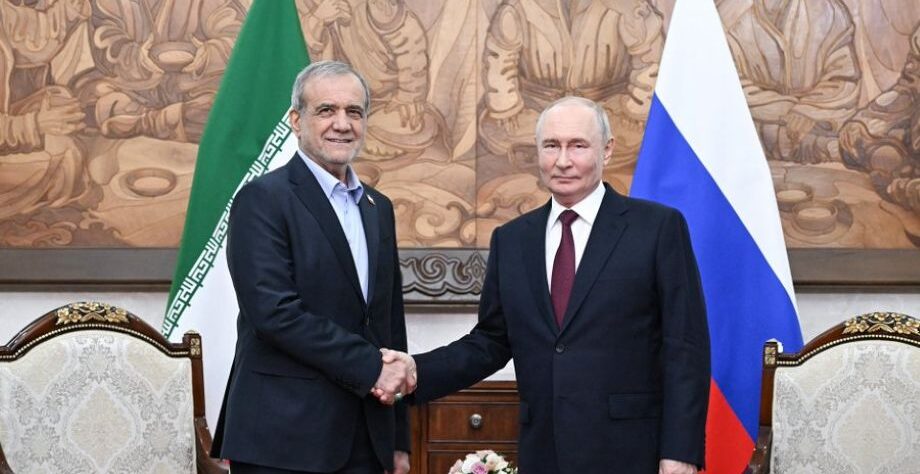
The reported programme also reflects the broader evolution of the Russia-Iran defence relationship. Iran has previously supplied military drones to Russia, while Moscow and Tehran have expanded cooperation in areas ranging from weapons technology to military support. The latest revelations suggest that the relationship is increasingly involving the transfer of sophisticated missile-development expertise rather than simply the exchange of finished weapons.
The reported Russian assistance comes at a particularly sensitive time, as tensions between Iran and the United States remain high. Recent fighting has included U.S. strikes on Iranian military and air-defence infrastructure and Iranian missile and drone attacks against U.S. positions in the region. Any future Iranian deployment of advanced supersonic cruise missiles could therefore have wider implications for the military balance in the Middle East and for the security of U.S. forces and naval assets operating in the region.
The reported C430L programme demonstrates how Russia-Iran military cooperation is moving into increasingly advanced areas of defence technology. If Iran succeeds in converting the technology into an operational weapon, it could strengthen the country’s ability to conduct high-speed precision strikes and further complicate the regional missile-defence environment.