


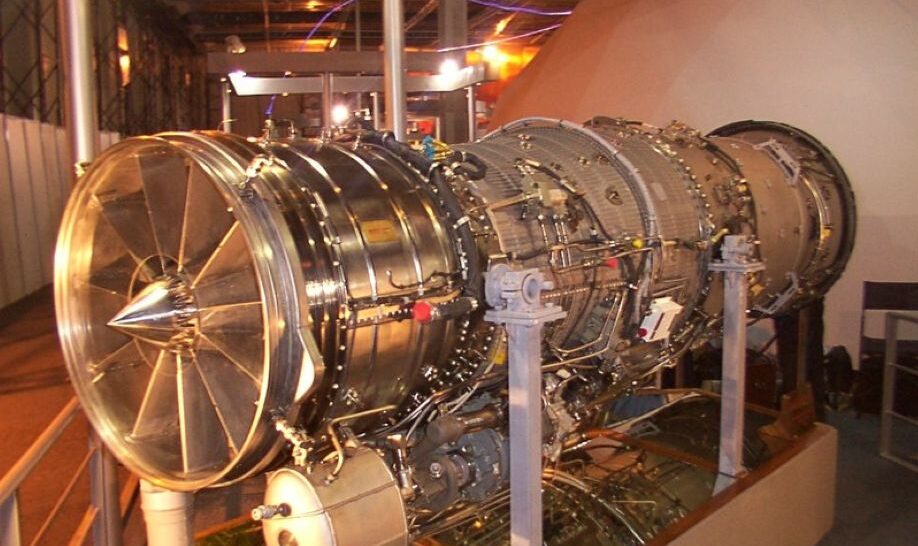
Nearly 18 years after India’s Kaveri jet engine was abandoned for the Tejas Light Combat Aircraft programme, the Defence Ministry is pushing for a revival targeting next-generation combat platforms, according to DRDO officials and recent statements from the Defence Minister.
The Gas Turbine Research Establishment (GTRE) in Bengaluru recently conducted a successful full-afterburner test of the upgraded Kaveri engine, achieving thrust levels of 81-83 kilonewtons, marking tangible progress on a programme that has consumed over three decades of development effort.
The original GTX-35VS Kaveri, approved in 1989 as part of the Light Combat Aircraft project, failed to meet the Indian Air Force’s performance and reliability requirements for the Tejas. The engine’s inability to deliver sufficient dry and wet thrust forced India to turn to General Electric’s F404 turbofans for the LCA Mk-1 fleet, a dependency that persists across the IAF’s frontline fighter force today.
The Defence Minister has set an ambitious timeline for DRDO scientists, urging them to develop sixth-generation fighter engines within five to seven years. In a February visit to GTRE, the minister acknowledged that advanced nations typically require 25 to 30 years for fighter engine development, then challenged the lab to compress that timeline by treating 20 years of foundational work as already complete.
The renewed push reflects India’s strategic imperative to achieve self-reliance in military aviation propulsion. With the Advanced Medium Combat Aircraft (AMCA) entering detailed design phases and requiring indigenous powerplant options, India cannot afford further delays. The Kaveri’s legacy technologies, refined over decades, now serve as the engineering foundation for AMCA propulsion concepts and marine gas turbine applications.
The recent afterburner upgrade was developed in collaboration with BrahMos Aerospace, signaling a broader integration of India’s aerospace-defence ecosystem. This partnership model mirrors India’s approach to complex programmes like AMCA, where multiple DRDO centres and private industry participate in subsystem development.
India’s continued reliance on imported engines for platforms ranging from the Tejas to the Su-30MKI represents both a technological vulnerability and a substantial foreign exchange drain. The fighter engine sector remains one of the most capital-intensive and knowledge-intensive domains in defence manufacturing, requiring mastery of metallurgy, thermodynamics, computational fluid dynamics, and precision manufacturing at scales that few nations have achieved.
GTRE’s work on Kaveri 2.0 must balance ambitious timelines against engineering realities. The engine will need certification for flutter, fatigue, thermal stress, and compressor surge across the operational envelope. The design integration with AMCA’s airframe and avionics will also impose fresh constraints.
India’s defence ecosystem now includes private aero-engine companies like Hindustan Aeronautics Limited and emerging startups, widening the talent pool available to GTRE. AI and advanced materials, explicitly mentioned by the Defence Minister as enabling technologies, offer pathways to accelerate development cycles without sacrificing safety and reliability standards.