


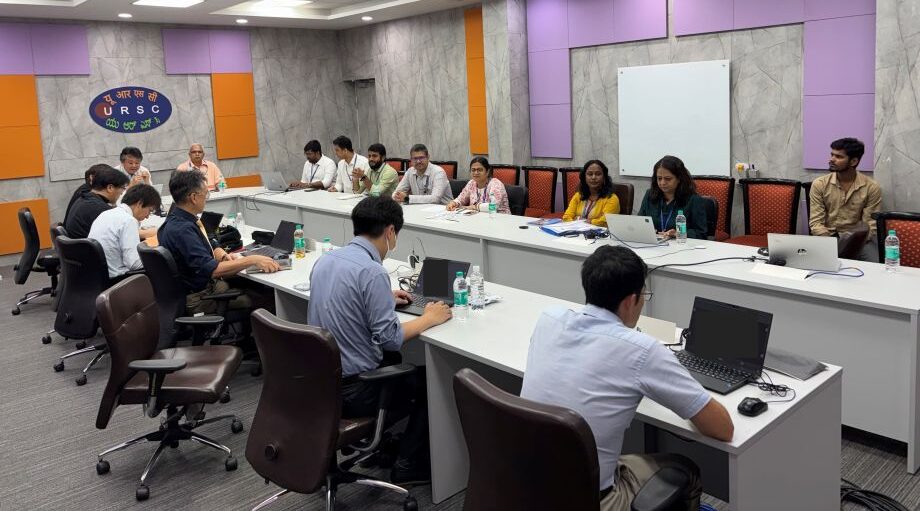
The Indian Space Research Organisation (ISRO) and Japan Aerospace Exploration Agency (JAXA) have taken another important step towards the Chandrayaan-5 mission after a key meeting in Bengaluru. The discussions focused on reviewing the mission’s progress, strengthening coordination between both space agencies and planning the upcoming phases of the joint Moon exploration programme.
Chandrayaan-5, also known as the Lunar Polar Exploration Mission (LUPEX), is a collaborative initiative between India and Japan aimed at exploring the Moon’s south polar region. The mission is designed to study the lunar surface, analyse available resources and gather scientific data that could support future exploration activities.
Under the mission partnership, ISRO will be responsible for developing the lander, while JAXA will contribute the rover system to explore the challenging terrain of the Moon’s polar region. The rover will carry advanced scientific instruments to examine surface materials and environmental conditions.
The Bengaluru meeting highlighted the continued cooperation between India and Japan in space technology and deep-space exploration. Experts from both countries discussed mission-related activities, system coordination and future development plans to ensure smooth progress towards the launch phase.
The Moon’s south pole has gained global attention due to its unique environment and the possibility of water ice deposits in permanently shadowed areas. Chandrayaan-5 aims to provide valuable scientific insights into these regions and contribute to future human and robotic missions.
The mission builds on the success of Chandrayaan-3, which established India as the first country to successfully land near the Moon’s south polar region. With Chandrayaan-5, India and Japan are aiming to further advance their capabilities in space exploration through international cooperation.
The ISRO-JAXA partnership on Chandrayaan-5 represents a significant milestone in India’s growing space programme and highlights the increasing role of global collaboration in future Moon exploration missions.