


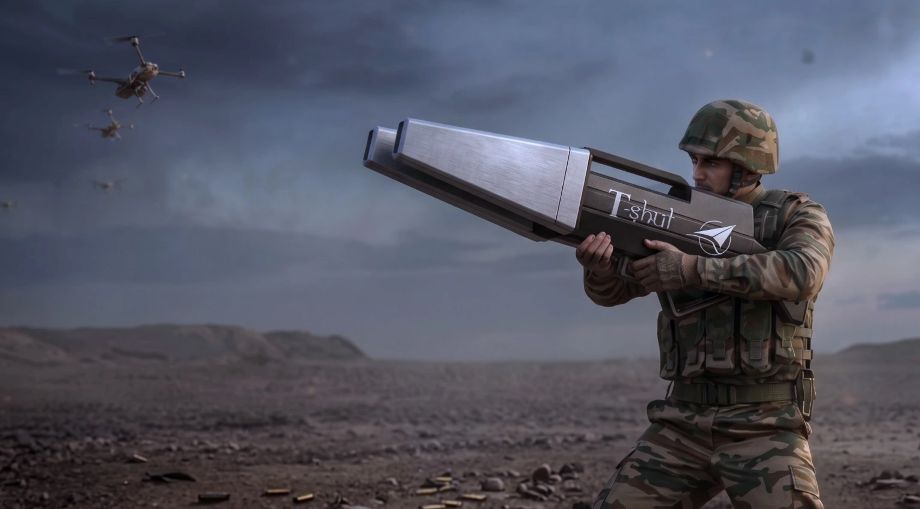
Indian defence technology company IG Defence has demonstrated its indigenous T-SHUL BEAM Counter-UAS system during the Indian Air Force’s Dronathan 2026 exercise at Pokhran, Rajasthan. The demonstration, conducted during the September 14–16 exercise, highlighted the growing role of locally developed counter-drone technologies in responding to small unmanned aerial threats.
T-SHUL BEAM is a man-portable, directional counter-drone system designed to neutralise hostile unmanned aerial systems through soft-kill electronic countermeasures. Instead of physically destroying a drone, the system is designed to disrupt the electronic links that enable the platform to communicate, transmit information and navigate.
According to information released about the system, its multi-band radio-frequency architecture is designed to target critical links associated with unmanned aircraft, including command-and-control, telemetry, video transmission and GNSS navigation signals. Its directional configuration allows countermeasures to be focused towards a specific aerial target, making the system suitable for tactical environments where small drones or FPV platforms may appear with limited warning.
The system has been developed with mobility in mind and is intended for use against small UAVs, FPV drones and other low-cost unmanned platforms. Its compact and directional design is aimed at providing military personnel with a rapidly deployable counter-UAS capability for forward positions, temporary operational locations and the protection of critical assets.
A notable aspect of T-SHUL BEAM is its integration with GRID, IG Defence’s indigenous AI-powered battle management system designed for C5ISRT applications. GRID is intended to bring sensors, unmanned systems, intelligence, communications and command elements into a common operational picture, allowing counter-drone operations to be integrated with wider battlefield information and decision-making systems.
The demonstration at Dronathan 2026 comes as armed forces worldwide continue to face an expanding threat from small drones, including inexpensive UAVs and FPV platforms. Such systems can be difficult to detect and counter because of their size, mobility and relatively low cost. This has increased demand for layered Counter-UAS capabilities combining detection, electronic warfare and other response options.
IG Defence said its focus extends across unmanned systems, AI-enabled battle management and technologies designed to counter emerging aerial threats. The T-SHUL BEAM demonstration at Pokhran therefore represents part of the company’s broader effort to develop an integrated indigenous technology ecosystem for unmanned and counter-unmanned warfare.
The Dronathan 2026 demonstration also underlines the increasing emphasis on indigenous Counter-UAS technology for India’s evolving operational requirements. With drones becoming an increasingly important component of modern military operations, mobile electronic countermeasures such as T-SHUL BEAM are emerging as one element of the wider effort to protect troops, forward positions and strategically important assets from unmanned aerial threats.