

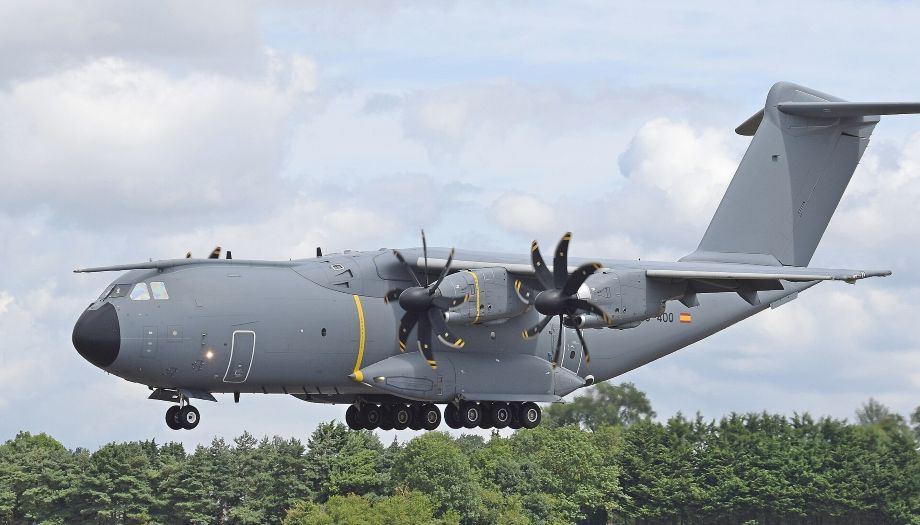
The Indian Air Force’s planned acquisition of new medium transport aircraft has entered a new phase following the reported withdrawal of Airbus from the competition with its A400M Atlas. The development reduces the number of platforms being considered for a major fleet modernisation programme aimed at strengthening the IAF’s airlift capabilities and replacing its ageing transport aircraft.
The Medium Transport Aircraft (MTA) programme is focused on acquiring aircraft in the 18–30 tonne payload category. India has been working on the programme for several years as part of efforts to replace its ageing Soviet-origin Antonov An-32 fleet with a more modern and capable transport platform. Recent reports indicate that the programme could involve around 60 aircraft and carry an estimated value of approximately ₹1 lakh crore.
The Airbus A400M was one of the aircraft previously associated with the competition. However, its maximum payload capability of about 37 tonnes places it above the upper end of India’s specified 30-tonne requirement. The aircraft’s larger size and capability could also translate into higher procurement, operating and long-term support costs compared with platforms designed more closely around the IAF’s medium-lift requirement.
The A400M is nevertheless a highly capable military airlifter, designed to perform both tactical and strategic transport missions. Its ability to carry heavier loads and operate from relatively austere airfields makes it suitable for a wide range of military missions. The aircraft had earlier been considered relevant to India’s plans for strengthening its medium and heavy airlift capabilities.
With the A400M reportedly no longer in the race, attention is expected to shift toward the remaining platforms that more closely match the IAF’s stated payload requirements. The Embraer C-390 Millennium offers a payload capacity of around 26 tonnes, while the Lockheed Martin C-130J Super Hercules is positioned at the lower end of the requirement with a payload of roughly 19 tonnes.
The C-130J has an additional advantage in India because the IAF already operates the aircraft for specialised transport missions. This existing operational experience could help with training, infrastructure and logistics. Lockheed Martin is also partnered with Tata Advanced Systems for its industrial presence in India.
The C-390, meanwhile, represents a newer-generation option with a higher payload than the C-130J while remaining within India’s specified medium transport category. Embraer has also been pursuing a broader industrial partnership in India, with Mahindra Defence involved in its proposal and plans for manufacturing and maintenance capabilities forming an important part of the pitch.
A major objective of the MTA programme is not simply the purchase of aircraft but the creation of a stronger domestic aerospace manufacturing ecosystem. India’s procurement model is expected to place considerable emphasis on local production, technology transfer and industrial participation, making the programme strategically important for the country’s broader defence manufacturing ambitions.
For the IAF, the new aircraft will provide a capability between its lighter tactical transport assets and larger strategic airlifters. The requirement is particularly significant as India seeks greater flexibility in moving personnel, vehicles, equipment and supplies across its vast territory, including areas where rapid air mobility is operationally important.
The A400M’s withdrawal therefore changes the competitive landscape, but it does not reduce the strategic importance of the MTA programme. The remaining contenders will now face closer scrutiny over payload, operating costs, performance, local manufacturing proposals, technology transfer and long-term support.
The final decision will depend on the evaluation process, commercial proposals and subsequent trials and negotiations. Whichever platform is selected will become an important component of the IAF’s future transport fleet and could also play a significant role in expanding India’s indigenous military aircraft manufacturing capabilities.