

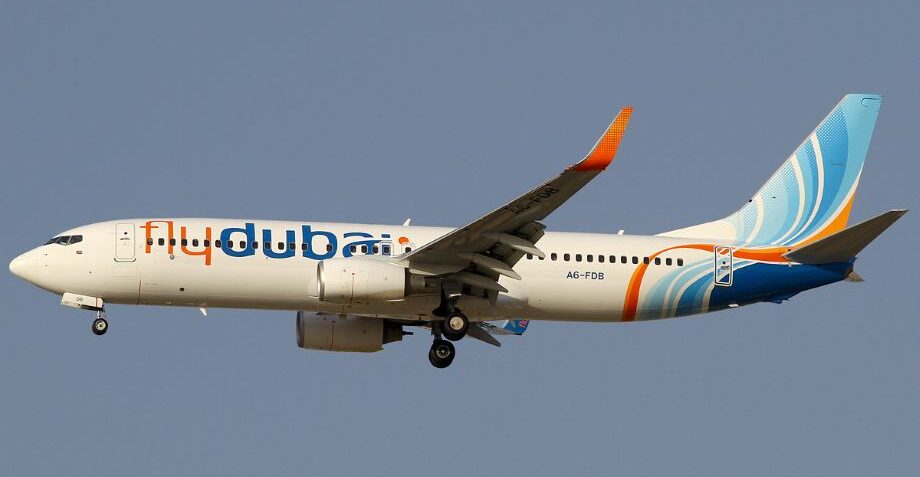
A dramatic mid-air incident aboard Flydubai Flight FZ1073 from Dubai to Tel Aviv has drawn international attention after Indian Captain Smit Machchhar was reportedly attacked inside the cockpit, triggering a sequence of emergency signals that alerted air traffic controllers to the crisis.
The Boeing 737 MAX 8 was flying from Dubai International Airport to Tel Aviv on September 30 when the situation reportedly escalated inside the flight deck. According to reports, Machchhar was seriously injured during a confrontation with the other pilot while the aircraft was cruising at high altitude.
Amid the emergency, Flight FZ1073 transmitted the internationally recognised Squawk 7700 code, which indicates a general emergency. The aircraft subsequently transmitted Squawk 7500, the code associated with unlawful interference and commonly linked with a possible hijacking situation. Flight-tracking data later showed the aircraft returning to 7700 before it was diverted toward Saudi Arabia.
These transponder signals were crucial because they provided air traffic controllers with an indication that the aircraft was facing a serious emergency even as events were unfolding inside the cockpit. A squawk code is entered into an aircraft’s transponder and transmitted to air traffic control systems, allowing controllers to identify the aircraft and recognise certain emergency situations.
The crisis reportedly became even more serious when the aircraft experienced a sharp loss of altitude. Reports based on flight-tracking data indicated that the aircraft descended rapidly from around 34,000 feet during the incident. The exact sequence of events inside the cockpit, however, remains under investigation.
According to accounts reported by Israeli officials, Machchhar managed to open the cockpit door despite being injured. This allowed passengers and crew members to enter the flight deck and help restrain the other pilot. Additional Flydubai crew members travelling on the aircraft subsequently helped secure the aircraft and manage the emergency.
The aircraft was eventually diverted to Tabuk in northwestern Saudi Arabia, where it landed safely. Both pilots were taken to hospital for medical treatment, while the passengers were later flown onward to Israel on another Flydubai aircraft. Reports said 174 people were aboard the flight.
Captain Smit Machchhar, an Indian national from Mumbai, has since received international attention for his actions during the emergency. He joined Flydubai in 2022 after spending more than a decade with SpiceJet and has served as a captain on the Boeing 737 fleet.
Indian Prime Minister Narendra Modi and Israeli Prime Minister Benjamin Netanyahu publicly praised Machchhar following the incident. Netanyahu said the captain’s actions helped prevent a potentially catastrophic outcome, while Modi described his conduct during the emergency as courageous.
The incident also prompted a security response in Israel after the 7500 signal was detected. Israeli authorities reportedly scrambled fighter aircraft as the situation developed, although the fighters turned back before the Flydubai aircraft landed in Saudi Arabia.
Flydubai has been more cautious in its public statements, describing the event as an incident involving the aircraft and stating that the underlying reasons and motives remained unknown and were subject to a formal investigation. The airline has also cautioned against premature speculation about what happened inside the cockpit.
The episode has highlighted the importance of aircraft emergency transponder codes in situations where normal communication with air traffic control may be difficult. In this case, the transition between 7700 and 7500 provided an important indication to authorities that Flight FZ1073 was experiencing an extraordinary emergency while thousands of feet above the ground.
Investigations by the relevant authorities are continuing to establish the precise circumstances of the cockpit confrontation, the motive behind it and the exact sequence of actions that allowed the aircraft to be brought safely to the ground.