


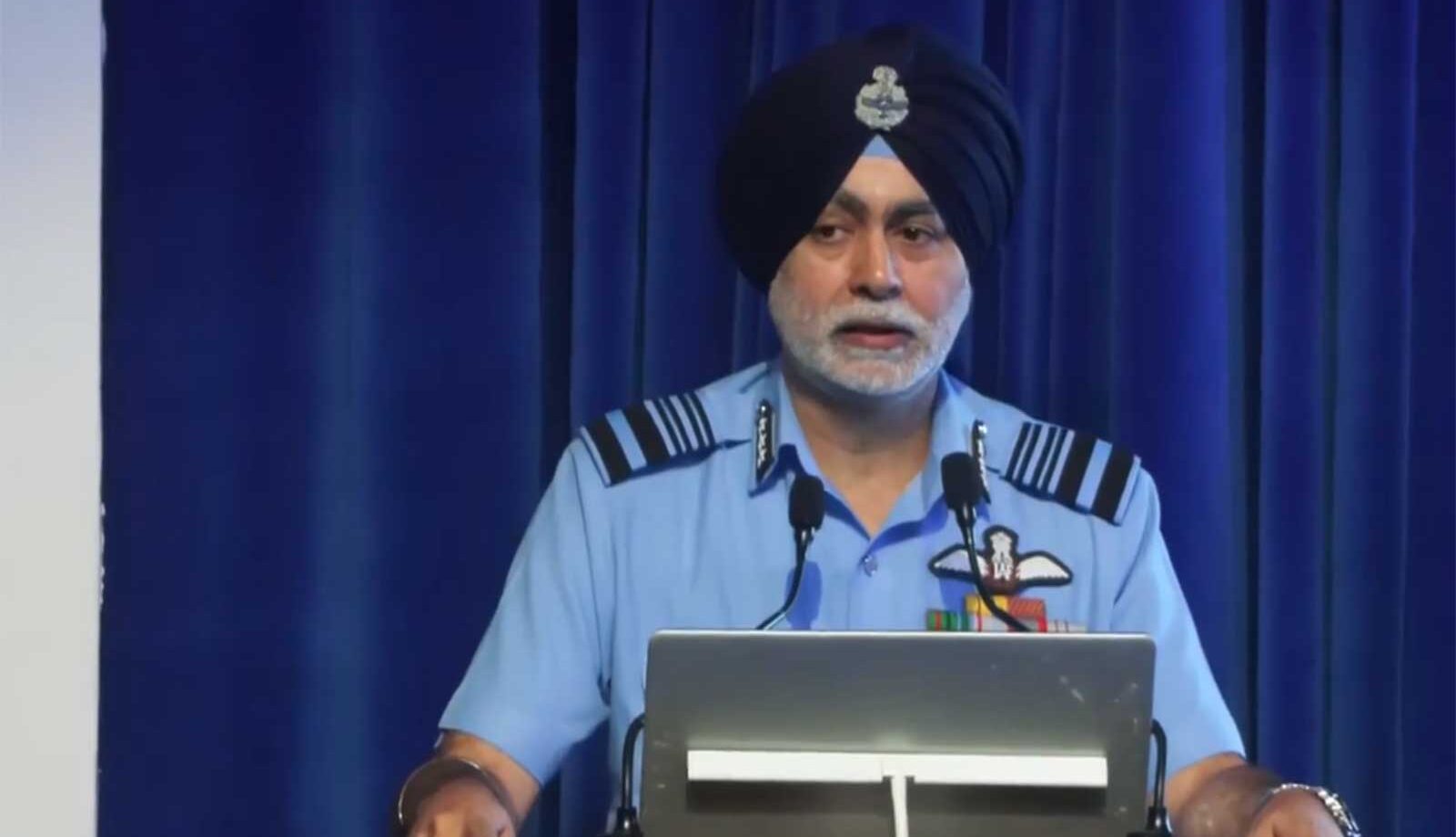
Modern warfare is increasingly being shaped by information, connectivity and the speed at which military forces can make decisions. Air Marshal Tejpal Singh, Deputy Chief of the Air Staff, has emphasised that information superiority and rapid decision-making will play a crucial role in determining battlefield success.
Speaking at a seminar organised by the Centre for Aerospace Power & Strategic Studies (CAPSS) and Indian Military Review (IMR) at Subroto Park, Air Marshal Singh highlighted the growing importance of shortening the OODA loop – Observe, Orient, Decide and Act. The ability to process information and respond faster than an adversary can provide a significant operational advantage.
He noted that while combat aircraft, weapons and other military platforms remain essential, their effectiveness increasingly depends on the networks connecting sensors, commanders and weapon systems. India’s Integrated Air Command and Control System (IACCS) is an important example of this approach, linking different sources of information to support a common operational picture.
The Air Marshal also stressed the importance of surveillance, electro-optical systems and C4I2 – Command, Control, Communications, Computers, Intelligence and Information. Integrating these capabilities can enable forces to detect threats earlier, improve situational awareness and coordinate responses across multiple operational domains.
Network resilience and cybersecurity are equally important in this environment. Military communication networks could face cyberattacks, electronic warfare and spoofing during conflict. Developing secure and resilient systems capable of operating under hostile conditions is therefore becoming a critical requirement.
Air Marshal Singh also called for interoperability to be considered during the design and development of defence systems rather than being added later. Common standards and secure communication architectures can help different platforms, sensors and intelligence systems work together more effectively.
He further emphasised stronger cooperation between the armed forces, defence industry and academia. Start-ups and MSMEs can contribute emerging technologies, while larger defence organisations and DPSUs can provide support and mentorship to accelerate the development of operationally useful systems.
The focus on information superiority reflects India’s broader shift towards network-centric and multi-domain warfare. As future conflicts become increasingly complex, the ability to collect, share and act upon information rapidly could become as important as the weapons and platforms themselves.