


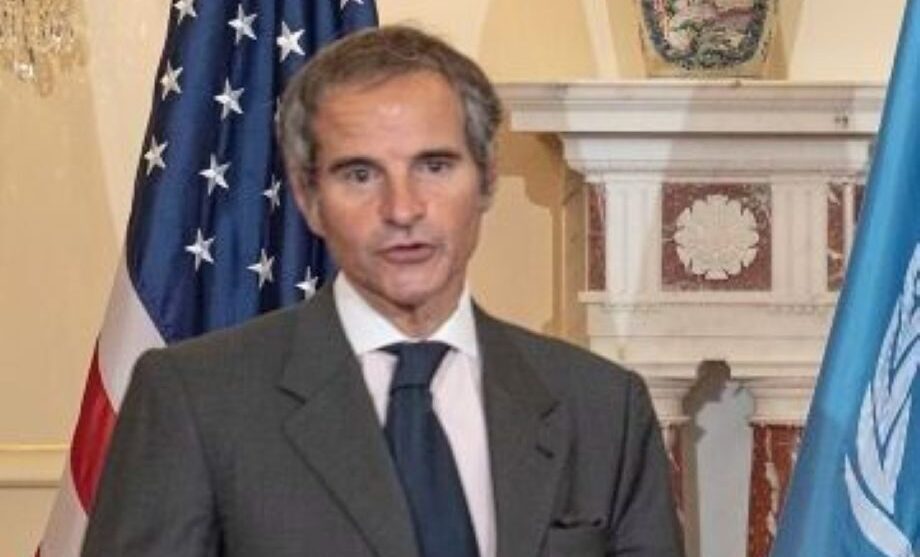
The head of the International Atomic Energy Agency (IAEA), Rafael Grossi, has renewed calls for Iran to restore access for international nuclear inspectors, stressing that Tehran must provide the information and cooperation required to verify its nuclear activities. Addressing the United Nations Security Council on October 27, Grossi said outstanding safeguards concerns must be resolved and urged Iran to allow inspections of relevant nuclear facilities and materials without further delay.
The demand comes amid continuing uncertainty over Iran’s stockpile of highly enriched uranium and the condition of nuclear facilities damaged during military strikes in 2025 and 2026. The IAEA has been unable to independently verify the status of key nuclear materials since inspectors lost access to several sites following the attacks on Iranian nuclear infrastructure.
Before the June 2025 strikes, the agency had estimated that Iran possessed approximately 440.9 kilograms of uranium enriched to 60 per cent purity. Although this concentration is below the roughly 90 per cent level generally associated with weapons-grade uranium, it remains significantly higher than the 3.67 per cent enrichment limit established under the 2015 nuclear agreement. The current location and condition of the stockpile remain matters of international concern because the agency cannot complete the necessary verification work.
Grossi told the Security Council that Iran’s cooperation is essential to resolving outstanding questions under its nuclear safeguards commitments. He emphasised that the IAEA needs access to relevant facilities and accurate information about declared nuclear material to determine whether the country is meeting its international obligations.
The nuclear watchdog’s monitoring difficulties intensified after Israeli and US military strikes targeted Iranian nuclear facilities in June 2025. Further attacks during the conflict that began in February 2026 added to the challenges facing international inspectors. While the IAEA has continued to use available monitoring methods, Grossi has stressed that satellite observations cannot replace direct inspections of nuclear installations.
The agency has reported no indication that Iran has attempted to repair or reconstruct facilities damaged in the military attacks. However, the absence of observed reconstruction activity does not resolve questions about the location and status of nuclear material or remove the need for on-site verification. The IAEA continues to seek access to affected sites to establish a clearer picture of Iran’s nuclear programme.
The Bushehr nuclear power plant has remained an exception to the broader inspection restrictions, with safeguards work continuing there. Cooperation at the facility offers a limited channel for technical engagement, although it does not address the agency’s outstanding concerns regarding other nuclear sites and previously declared material.
The Security Council meeting followed a September 2026 decision by the IAEA Board of Governors to refer Iran’s nuclear non-compliance to the council. The move marked the first such referral in approximately two decades and increased diplomatic pressure on Tehran to address the agency’s concerns.
The decision was supported by Britain, France, Germany and the United States. Russia and China opposed the resolution, alongside Niger, highlighting divisions among major international powers over how to address Iran’s nuclear activities. Any further action by the Security Council could face political obstacles, particularly if proposals involve new punitive measures.
Iran has rejected criticism of its nuclear programme and accused Western governments of applying double standards. During the Security Council discussions, Iranian representatives criticised the lack of condemnation of US and Israeli military action against the country and argued that international scrutiny was being used for political purposes. Tehran maintains that its nuclear activities are peaceful and has challenged the legitimacy of the pressure directed against it.
The dispute comes as diplomatic efforts to address Iran’s nuclear programme remain uncertain. The IAEA maintains that independent verification is necessary to establish the status of nuclear materials and provide confidence that declared material is being used for peaceful purposes. Without access to relevant facilities and updated information, the agency cannot offer a complete assessment of Iran’s nuclear activities.
Grossi’s latest appeal underscores the continuing importance of inspections and technical cooperation in preventing further escalation of the nuclear dispute. Restoring access could help clarify unresolved questions, rebuild confidence between Iran and the international community, and support future diplomatic negotiations. For now, the lack of comprehensive verification remains a major obstacle to establishing the status of Iran’s nuclear stockpile and resolving wider concerns over its nuclear programme.