


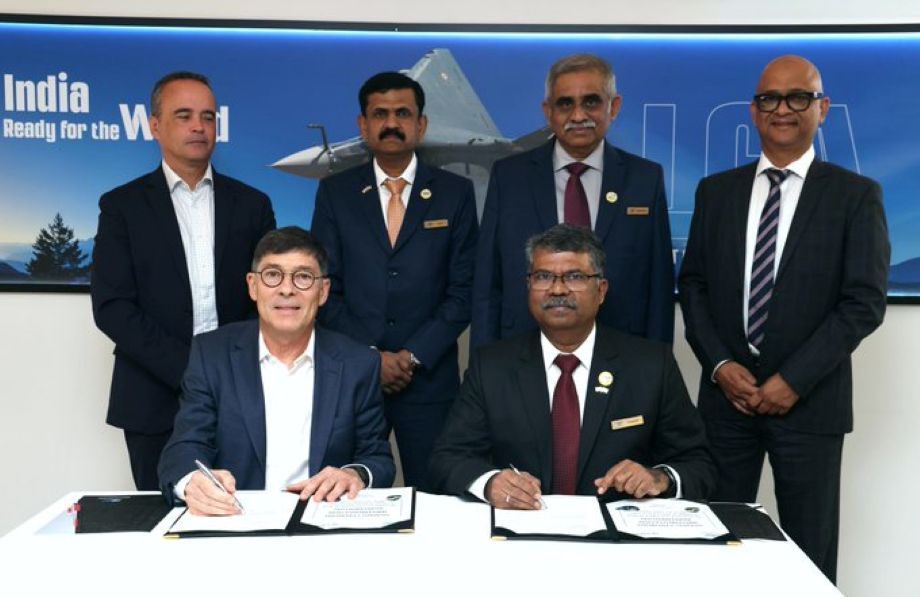
HAL and Safran have signed a long-term contract for the supply of turbine forgings used in LEAP aircraft engines, according to Indian Defence News. The agreement marks a significant step in India’s push to localise the supply chain for advanced aerospace components and reduce dependence on imports.
The LEAP (Leading Edge Aviation Propulsion) engine is a modern high-bypass turbofan developed jointly by CFM International, a 50-50 partnership between General Electric and Safran. The LEAP family powers narrow-body aircraft including the Boeing 737 MAX, Airbus A320neo, and Bombardier C Series, making it one of the world’s most widely deployed civil aircraft engines.
Turbine forgings are critical hot-section components that must withstand extreme temperatures, pressures, and centrifugal forces in the engine’s core. HAL’s manufacturing capability in precision forging, combined with Safran’s materials and quality standards, positions the Indian aerospace company to support global supply chains while building domestic expertise in high-performance turbine technology.
This contract aligns with India’s broader strategy to develop indigenous aerospace manufacturing capacity and attract defence and aerospace OEMs to establish production hubs in the country. HAL, the nation’s primary aerospace PSU, has been progressively expanding its role in the commercial aviation sector beyond military aircraft programmes like the Tejas light combat aircraft.
The LEAP engine supply chain already extends across multiple countries including India, France, Germany, Japan, and the United States. By securing turbine forging orders from Safran, HAL gains access to high-value, precision manufacturing work that strengthens its technological foundation and export potential in the commercial aerospace supply base.
Safran is a global leader in propulsion and aerospace equipment, with major joint ventures including CFM International for engines and Airbus Helicopters for rotorcraft. The company has progressively deepened its engagement with Indian industry, viewing the country as both a manufacturing hub and a growing market for next-generation aircraft and engines.
The contract also reinforces the strategic partnership between India and France in defence and aerospace, a relationship that spans military programmes, space cooperation, and industrial collaboration. Such agreements accelerate the development of India’s aerospace ecosystem and create skilled employment in precision manufacturing sectors critical to the country’s vision of becoming an aerospace superpower.