


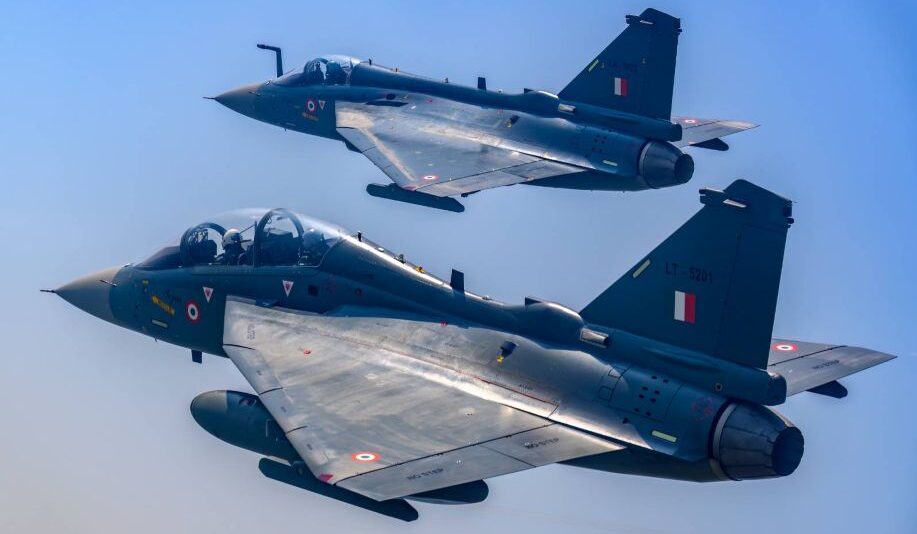
Hindustan Aeronautics Limited is targeting production of 30 Tejas MK-1A light combat aircraft per year, backed by General Electric’s commitment to supply engines for the Indian Air Force’s indigenous fighter programme, according to indiandefensenews.in.
This production ramp-up marks a significant acceleration in HAL’s manufacturing capacity for the Tejas, India’s first indigenously designed and developed combat aircraft. The MK-1A variant represents the production-standard configuration of the light combat aircraft, incorporating lessons learned from the MK-1 variant currently in service with the IAF.
The Tejas programme, initiated by the Defence Research and Development Organisation in the 1980s, has undergone two decades of development and flight testing before entering operational service. The aircraft is powered by the General Electric F404-GE-F2J3 turbofan engine, a proven powerplant that delivers 19,200 pounds of thrust and enables supersonic performance in the subsonic-optimised airframe design.
The MK-1A configuration addresses operational feedback from IAF squadrons and incorporates enhanced avionics, improved range through increased fuel capacity, and upgraded combat systems. The variant also features an air refuelling probe, enabling extended mission range and combat persistence critical for India’s strategic air defence requirements across diverse terrain and altitude bands.
GE’s backing for sustained engine supply is essential for this production target. The company’s F404 engine has proven reliable across multiple global operators and has been the foundation of HAL’s technical partnership for Tejas engine integration and lifecycle support. This collaboration reduces programme risk and assures the Indian Air Force of consistent supply chains.
Currently, the IAF operates Tejas squadrons equipped with the MK-1 variant, with additional orders for the MK-1A already confirmed. A production rate of 30 aircraft annually would represent a substantial commitment from HAL’s Bangalore facility and would position the Tejas as a credible competitor in the global light combat aircraft market, alongside platforms such as the Gripen E and F-16 Block 70/72.
This production surge aligns with India’s broader indigenisation agenda under the Make in India framework and reduces dependency on foreign suppliers for critical air defence capabilities. The Tejas programme has generated a substantial domestic aerospace and defence industrial base, with over 500 vendors supplying components and subsystems across India.
HAL’s production target also reflects confidence in the aircraft’s operational acceptance by the IAF and the Indian Navy, which is pursuing the naval variant for carrier operations. The acceleration in MK-1A output signals the maturation of India’s light combat aircraft programme and its readiness to meet the air force’s fleet modernisation timeline.