


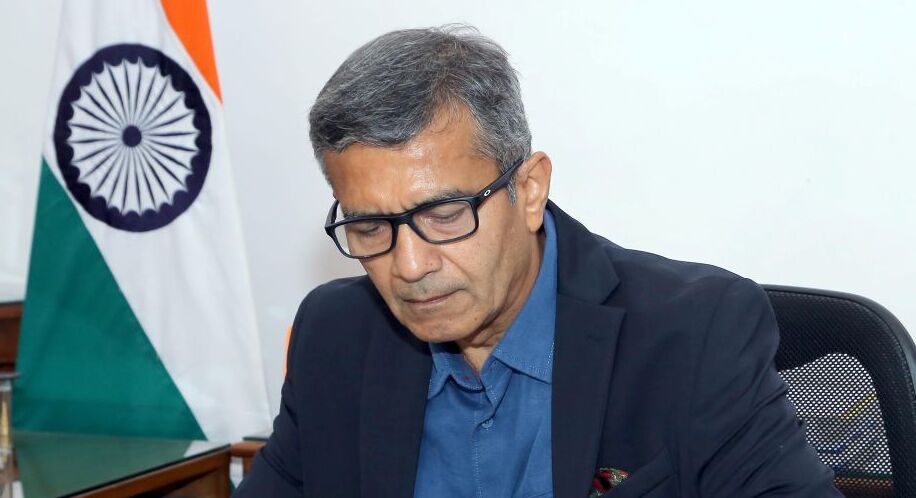
India is on course to achieve its ambitious ₹50,000 crore annual defence exports target by 2030, with Defence Secretary Rajesh Kumar Singh expressing confidence that the milestone can be reached comfortably as the country’s defence manufacturing ecosystem continues to expand.
Speaking on India’s growing presence in the global defence market, Singh said the country’s export performance has strengthened significantly over the past few years, supported by government reforms, increasing private sector participation and rising international demand for Indian-made military equipment.
India recorded defence exports worth ₹38,424 crore during FY26, marking another year of strong growth and bringing the country substantially closer to its long-term objective. The steady rise reflects the success of initiatives aimed at boosting indigenous production under the government’s self-reliance programme.
According to the Defence Secretary, India’s defence export portfolio has become increasingly diversified, with domestic companies supplying products ranging from protective gear and ammunition to sophisticated missile systems, surveillance equipment, naval platforms and aerospace components. Indian defence manufacturers are now catering to customers across more than 100 countries, highlighting the growing international acceptance of locally developed military technologies.
Singh noted that approximately 145 Indian defence companies are currently engaged in exports, representing both public and private sector enterprises. The expanding industrial base has enabled India to offer a wider range of competitively priced defence products while maintaining quality and reliability.
The government has also streamlined export procedures and introduced policy reforms to encourage domestic manufacturers to access international markets. These measures have reduced procedural bottlenecks and created a more favourable environment for defence companies seeking overseas contracts.
India has further strengthened its export ecosystem by issuing nearly 1,800 defence export authorisations during FY26, reflecting the growing volume of international business generated by the country’s defence industry. The increase underscores India’s emergence as a credible supplier of military equipment to friendly foreign nations.
The Defence Secretary also highlighted that Defence Public Sector Undertakings (DPSUs) are witnessing rising global demand, particularly for ammunition, artillery systems and other defence equipment, amid increasing defence spending across several regions due to evolving geopolitical security challenges.
Industry analysts believe continued investments in research and development, advanced manufacturing and defence innovation will further enhance India’s competitiveness in the global arms market. The growing contribution of start-ups, MSMEs and private manufacturers is also expected to accelerate the development of next-generation indigenous defence technologies.
With defence production reaching record levels and export orders continuing to rise, India is steadily strengthening its position as a global defence manufacturing hub. If current growth trends continue, the country’s target of ₹50,000 crore in annual defence exports by 2030 appears well within reach, reinforcing its broader vision of becoming a major exporter of advanced defence systems.