


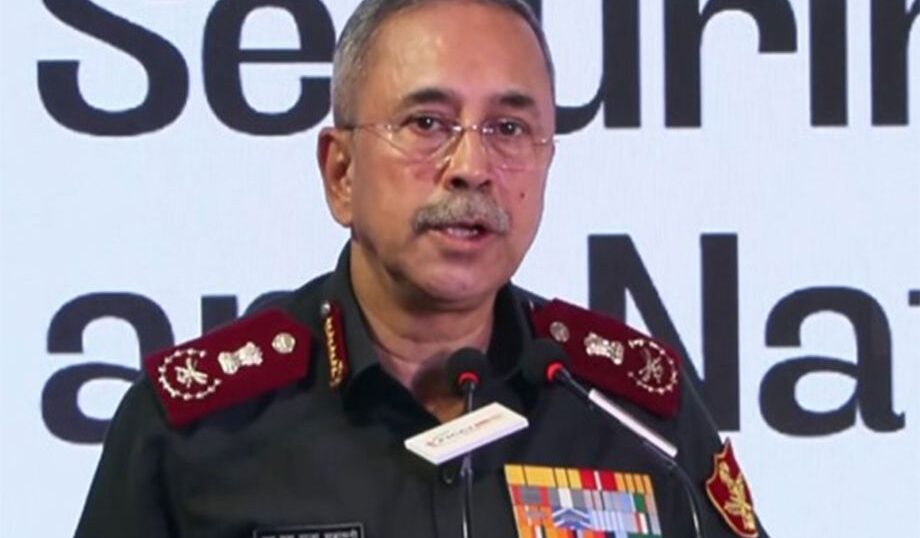
Chief of Defence Staff (CDS) General NS Raja Subramani has emphasised that India must strengthen its indigenous defence capabilities to protect its national security and reduce dependence on foreign suppliers. He described Atmanirbharta as a strategic necessity rather than just a slogan, stating that the country’s security cannot be outsourced to other nations.
Addressing the Federation of Indian Chambers of Commerce and Industry (FICCI) Annual General Meeting and Annual Convention on ‘Bharat 2047’ in New Delhi on November 18, General Subramani called for closer cooperation between India’s armed forces and domestic industries. He said Indian manufacturers must move beyond conventional equipment supply and actively participate in developing advanced defence technologies.
The CDS highlighted the importance of building domestic manufacturing capabilities before security challenges emerge. He referred to industrialist Walchand Hirachand’s contribution in 1940, when he established Hindustan Aircraft in Bengaluru and initiated shipyard development in Visakhapatnam. These initiatives demonstrated the importance of developing indigenous industrial capacity even when the country faced significant technological limitations.
General Subramani also linked national security with India’s ambition of becoming a developed nation by 2047. He explained that economic growth, international trade, energy security and industrial development require a stable and secure environment.
Discussing the changing nature of warfare, the CDS stressed that future military operations will increasingly depend on advanced technologies and interconnected defence systems. He called for a transition from platform-centric warfare, which focuses on individual military assets, towards system-centric warfare, where aircraft, warships, drones, satellites, sensors and communication networks operate together.
He also highlighted the importance of decision superiority through the OODA loop, which stands for Observe, Orient, Decide and Act. According to this concept, military forces that can process information and make decisions faster than their adversaries can gain an operational advantage. Artificial intelligence will play an increasingly important role in analysing battlefield information and supporting faster decision-making.
To illustrate the scale of technology-driven warfare, General Subramani referred to reported US strikes against approximately 1,000 targets on the first day of the US-Iran conflict. He questioned whether operations of such magnitude could have been conducted manually within a similar timeframe, highlighting the growing importance of automation and advanced data processing.
His remarks underline India’s need to combine domestic defence manufacturing with technological innovation and military modernisation. Stronger partnerships between the armed forces, private companies and research institutions will be essential to developing advanced indigenous capabilities.
The CDS’s message was clear: India’s future military strength will depend not only on the equipment it possesses but also on its ability to independently develop technology, integrate military systems and respond quickly to emerging security challenges.