


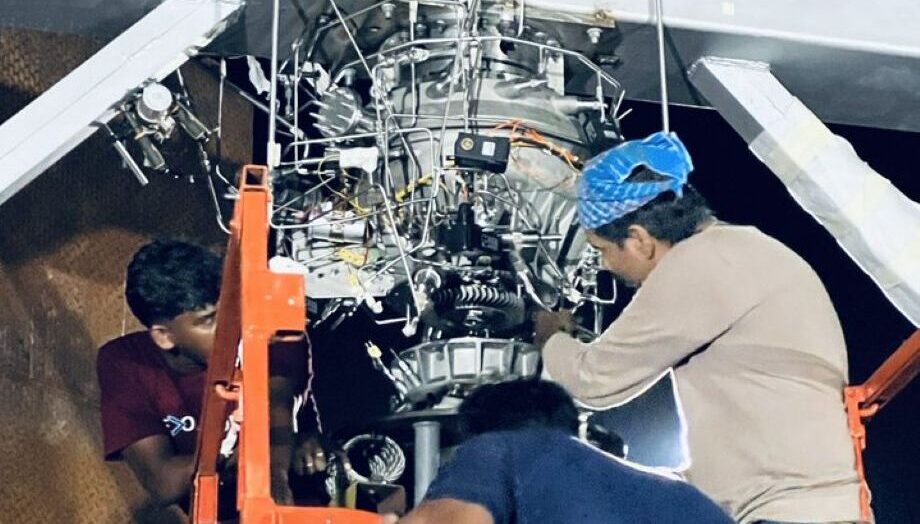
India’s private space sector is set to witness a major technological milestone as Astrobase Space Technologies prepares to unveil the country’s first fully integrated 80-tonne-class Full Flow Staged Combustion (FFSC) rocket engine on August 8, marking a significant advancement in indigenous propulsion capabilities.
Bengaluru-based space startup Astrobase Space Technologies is making significant progress in developing advanced rocket propulsion technology with its upcoming 80-tonne-class FFSC engine. The unveiling is expected to highlight India’s growing capabilities in developing high-performance propulsion systems that could support future launch vehicles and reusable space missions.
The Full Flow Staged Combustion (FFSC) engine cycle is among the most advanced rocket propulsion technologies in the world. Unlike conventional engine designs, FFSC architecture allows both fuel and oxidiser streams to be fully utilised through staged combustion, improving efficiency, performance, and fuel utilisation. Due to its technical complexity, only a few countries have successfully worked on similar propulsion technologies.
Astrobase’s engine is designed around liquid oxygen (LOX) and methane propulsion technology, a fuel combination considered highly suitable for next-generation reusable rockets. Methane-based propulsion offers advantages such as cleaner combustion, reduced engine maintenance requirements, and better potential for repeated launches compared to traditional rocket fuels.
The development comes at a time when India’s private space industry is expanding rapidly, with startups taking a greater role in areas such as launch vehicles, satellite systems, and advanced aerospace technologies. Astrobase’s work represents the increasing involvement of private players in building critical space infrastructure within the country.
The 80-tonne-class FFSC engine could become an important component for future heavy-lift launch systems and commercial space missions. High-thrust and efficient propulsion technologies are essential for reducing launch costs, improving mission flexibility, and supporting India’s long-term ambitions in the global space economy.
The upcoming August 8 unveiling reflects India’s continued efforts towards self-reliance in space technology. While organisations like ISRO have played a leading role in India’s space achievements, private companies are now contributing innovative solutions that can accelerate the country’s journey towards advanced launch capabilities.
With the development of sophisticated propulsion systems, India is strengthening its position in the international space sector. Astrobase’s 80-tonne-class FFSC rocket engine represents a significant step towards creating indigenous technologies that could support future exploration missions, commercial launches, and reusable spacecraft programmes.
The unveiling of this advanced engine on August 8 is expected to mark an important chapter in India’s evolving private space ecosystem and its ambition to emerge as a leading player in the global space industry.