

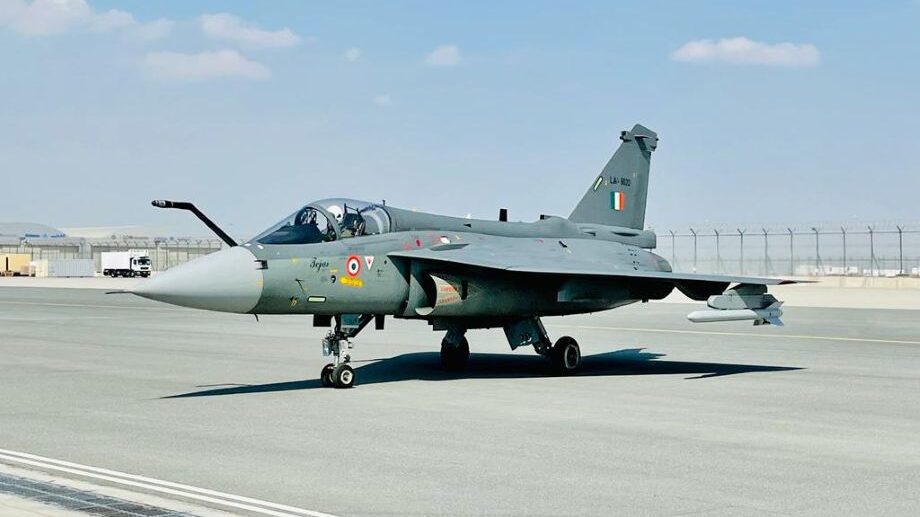
The Indian Air Force (IAF) is targeting the induction of its indigenous Light Combat Aircraft (LCA) Tejas Mk1A by March 2027, with the first squadron expected to join its operational fleet within the current financial year. Air Chief Marshal Ashutosh Dixit indicated that the aircraft programme is approaching a significant milestone following efforts to address key development and performance-related requirements in collaboration with Hindustan Aeronautics Limited (HAL).
Speaking at the ANI National Security Summit 3.0 in New Delhi, the Air Chief said that the four major areas identified for improvement in the aircraft had been addressed through joint efforts between the Indian Air Force and HAL. He expressed confidence that the Tejas Mk1A would join the IAF fleet shortly, adding that the service expects to induct a full squadron before proceeding with further development of the programme.
Air Chief Marshal Dixit highlighted the complexity of developing an indigenous fighter aircraft, describing the Tejas programme as a major national undertaking involving hundreds of research centres, laboratories and technical institutions across the country. He noted that approximately 600 to 700 work centres and laboratories, including Indian Institutes of Technology (IITs), railway laboratories and institutions under the Council of Scientific and Industrial Research (CSIR), contributed to the aircraft’s development.
The Air Chief also acknowledged that initial testing of the LCA had revealed certain shortcomings that required attention. Instead of treating these challenges separately, the Indian Air Force worked with HAL to identify and address four key areas requiring improvement. According to Dixit, the collaborative effort has brought these improvements close to completion, clearing an important stage for the aircraft’s planned induction.
The expected arrival of the Tejas Mk1A comes at a critical time for the Indian Air Force, which is working to strengthen its fighter squadron numbers. The service has a sanctioned requirement of 42 fighter squadrons, while its operational strength remains considerably below that level. The retirement of older fighter aircraft and delays in new aircraft deliveries have increased the importance of bringing indigenous platforms into service.
The Tejas Mk1A is an upgraded version of the original Tejas Light Combat Aircraft, designed to provide improved operational capabilities and modern combat features. Its induction is expected to support the IAF’s efforts to gradually replace ageing aircraft while expanding the role of domestically developed combat platforms in India’s air defence structure.
Beyond the Tejas Mk1A, Dixit also indicated progress in India’s next-generation fighter aircraft development programme. He said the LCA Mk2 could roll out next year, reflecting the continued advancement of India’s indigenous fighter aircraft ambitions. The Advanced Medium Combat Aircraft (AMCA) programme is another major priority, with the country working towards developing an indigenous fifth-generation fighter aircraft.
The planned Tejas Mk1A induction also carries wider implications for India’s defence manufacturing ecosystem. A successful transition from development and testing to large-scale production would strengthen the country’s domestic aerospace industry, improve the capabilities of local suppliers and reduce dependence on foreign platforms for future combat aircraft requirements.
However, the March 2027 target will depend on the completion of the remaining programme activities and the aircraft’s readiness for operational service. The first squadron’s induction would represent an important step towards strengthening the IAF’s combat capabilities and advancing India’s long-term objective of achieving greater self-reliance in military aviation.