


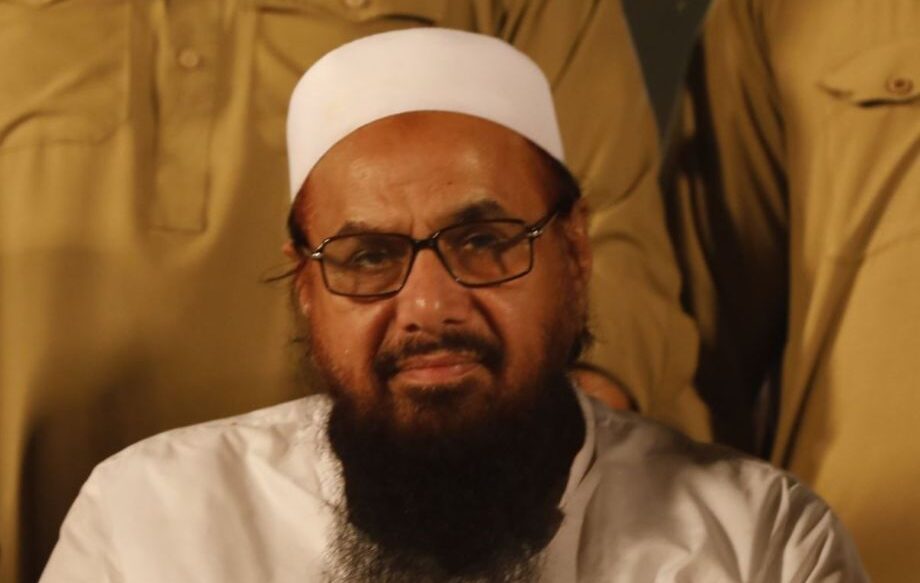
Pakistan’s intelligence establishment has reportedly moved two of India’s most wanted terrorists, Hafiz Saeed and Masood Azhar, to new heavily guarded locations amid growing security concerns following India’s Operation Sindoor. According to intelligence inputs cited in recent media reports, the relocation was carried out over the past week, with both individuals now believed to be staying in secure facilities allegedly operated under the protection of Pakistan’s Inter-Services Intelligence (ISI).
Hafiz Saeed, the founder of Lashkar-e-Taiba (LeT), has reportedly been shifted from Lahore’s Johar Town area to the Garrison Ground locality in Rawalpindi. The reported location is close to Pakistan Army headquarters, making it a strategically sensitive area with a substantial security presence. Meanwhile, Masood Azhar, the founder and chief of Jaish-e-Mohammed (JeM), is said to have been relocated to a heavily protected safe house in Nawabshah, located in Pakistan’s Sindh province.
The reported relocation appears to reflect increasing concerns within Pakistan’s security establishment about the safety of prominent terrorist figures. Intelligence sources suggest that the possibility of further Indian military action, particularly following Operation Sindoor in May 2025, has prompted additional protective measures. The reported threat from unidentified gunmen, who have targeted several anti-India militants inside Pakistan in recent months, is also believed to have contributed to these security arrangements.
Operation Sindoor marked a significant development in India’s counter-terrorism response after the April 22, 2025, Pahalgam terror attack, which claimed 26 lives. On May 7, 2025, Indian armed forces launched strikes against identified terrorist infrastructure in Pakistan and Pakistan-occupied Kashmir. The operation targeted facilities associated with Lashkar-e-Taiba and Jaish-e-Mohammed, among other locations, as part of India’s effort to dismantle networks responsible for cross-border terrorism.
The consequences of the operation reportedly extended to the organisational infrastructure of both groups. Jaish-e-Mohammed’s Markaz Subhan Allah complex in Bahawalpur sustained extensive damage, according to reports, affecting the organisation’s ability to maintain and rebuild its operational network. The reported damage has also raised questions about the group’s ability to restore its previous organisational structure.
Security arrangements surrounding Hafiz Saeed have allegedly become considerably stricter. Reports indicate that he has stopped holding direct meetings with Lashkar members and has increasingly relied on audio messages to communicate with individuals associated with the organisation. His movements are reportedly restricted, while access to him has been limited as part of additional protective measures.
Pakistan has maintained that Saeed is serving a prison sentence in connection with terrorism-financing cases at Lahore’s Kot Lakhpat Jail. However, intelligence assessments cited in recent reports dispute this position, claiming that he is instead residing in an ISI-protected facility. The conflicting accounts have renewed scrutiny of Pakistan’s handling of individuals accused of involvement in major terrorist activities.
Masood Azhar has reportedly adopted similar precautions, reducing direct interaction with members of Jaish-e-Mohammed. He is believed to be maintaining contact with only a limited circle of associates, including selected senior commanders. The reported restrictions come as the organisation continues to face challenges following the damage to its infrastructure during Operation Sindoor.
Both Saeed and Azhar have been designated global terrorists by the United Nations. Hafiz Saeed is wanted by Indian authorities in connection with the 2008 Mumbai terrorist attacks and other terror-related activities. Masood Azhar has been linked to several major attacks against India, including the 2001 Parliament attack, the 2016 Pathankot airbase attack and the 2019 Pulwama bombing.
The reported movement of the two terrorist leaders highlights the continuing security concerns surrounding Pakistan-based militant organisations and their leadership. It also draws attention to the wider regional implications of India’s counter-terrorism operations and the persistent threat posed by cross-border terrorist networks.
Although the latest relocation claims have been attributed to intelligence sources and have not been independently confirmed through an official Pakistani announcement, the developments have renewed attention on the security and operational status of Lashkar-e-Taiba and Jaish-e-Mohammed. Their future activities, organisational recovery and the broader regional security environment are likely to remain important concerns for Indian defence and intelligence agencies.