

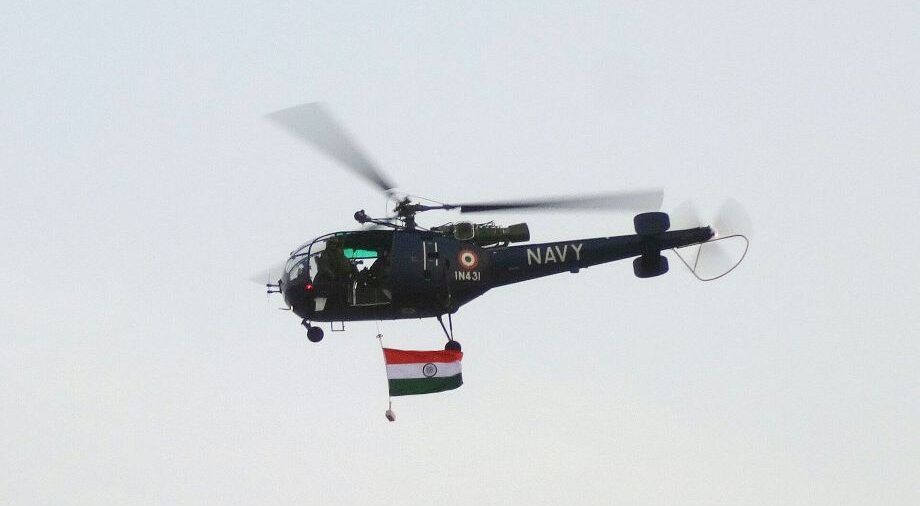
The Indian Navy is exploring a new role for its ageing Chetak helicopter fleet through an initiative to convert existing aircraft into autonomous, uncrewed platforms. Bengaluru-based defence technology company Xinfiniti AeroSpace has started ground-phase trials under the Naval Chetak Autonomous System (NCAS) programme, which aims to transform conventional helicopters into pilotless aircraft.
The project focuses on upgrading legacy Chetak helicopters with autonomous flight controls, navigation technologies and ground-control systems. Instead of developing an entirely new aircraft, the initiative seeks to reuse existing airframes and adapt them for missions that do not necessarily require onboard pilots.
The programme is being pursued through the Indian Navy’s innovation ecosystem under the Innovations for Defence Excellence (iDEX) framework. According to Xinfiniti AeroSpace Chief Executive Officer Vishal Kumar Verma, the company has received a major project from the Navy to demonstrate the conversion of a legacy military helicopter into an autonomous platform.
The proposed aircraft could support several military requirements, including cargo transportation, reconnaissance, surveillance and potential combat-related operations. Autonomous operation could also reduce risks to personnel by eliminating the need for pilots during selected missions.
The company believes that converting existing helicopters could offer a more economical alternative to developing entirely new autonomous aircraft. Reusing established airframes may help reduce development costs and make better use of available military aviation assets. However, the platform’s operational capabilities will need to be established through further testing and evaluation.
The Chetak helicopter, manufactured by Hindustan Aeronautics Limited (HAL), is based on the French Alouette III design and has served India’s armed forces since the 1960s. The platform has supported the Indian Navy, Army, Air Force and Coast Guard in transportation, search-and-rescue, communication and other utility operations.
After decades of military service, the ageing fleet faces increasing modernisation requirements. The NCAS initiative could provide selected helicopters with an extended operational role by adapting them to emerging unmanned aviation requirements.
The programme also reflects India’s growing interest in autonomous military systems for logistics, surveillance and operations in challenging environments. If successful, the conversion could establish a new approach to extending the usefulness of older military aircraft.
For now, the project remains in its development and ground-testing phase. Its progress towards autonomous flight demonstrations and operational deployment will depend on the successful validation of its control systems, flight safety and mission capabilities.