


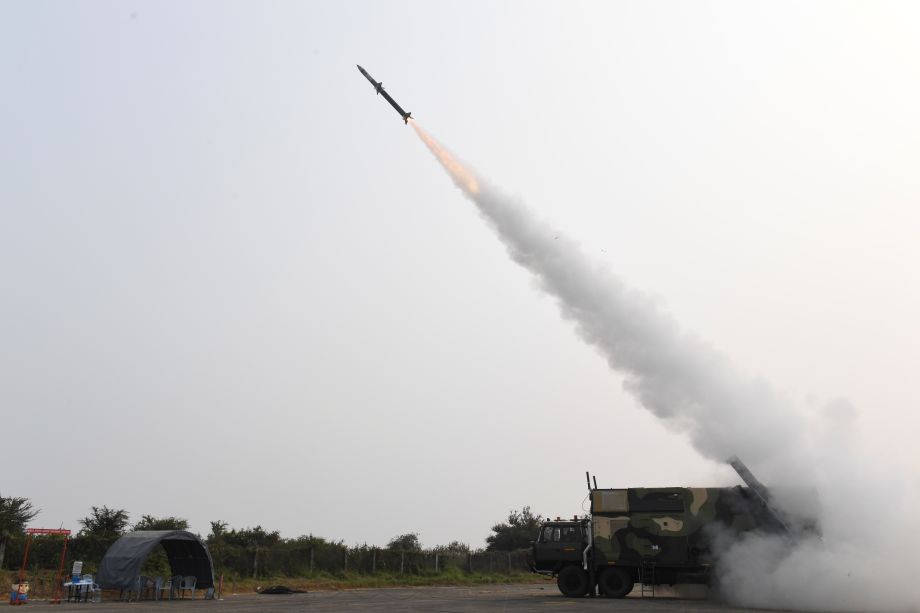
An indigenously developed short-range surface-to-surface missile designed by an Indian private-sector company has successfully completed its second flight test from the Integrated Test Range (ITR) off the Odisha coast on November 12, 2026. The latest achievement marks further progress in the development and evaluation of a privately developed missile system, highlighting the expanding contribution of domestic industry to India’s defence technology ecosystem.
The second flight trial follows the missile’s first experimental launch, which was conducted on November 3. Both launches are part of an ongoing developmental testing programme intended to assess the missile’s performance and establish its reliability through successive flight evaluations. The latest test reportedly achieved its planned objectives, providing the development team with additional information for assessing the weapon system.
The missile has been developed by an Indian private-sector firm, reflecting the increasing participation of domestic companies in advanced defence research and manufacturing. While government organisations have traditionally played a leading role in India’s missile development programmes, private industry is gradually becoming an important contributor to the country’s indigenous defence capabilities.
The Defence Research and Development Organisation (DRDO) provided technical and logistical assistance for the latest flight trial. The support included the use of tracking systems and specialised instrumentation at the Integrated Test Range to monitor the missile’s flight and collect relevant performance data. The information gathered during the exercise is expected to support further technical assessment and refinement of the system.
Preparations for the launch also involved aviation safety arrangements. Authorities issued a Notice to Airmen (NOTAM) identifying a designated safety zone extending up to 80 kilometres. Such notifications help establish temporary restrictions around the planned test area and maintain the safety of civilian aircraft operating in the surrounding airspace.
The completion of two successful developmental flights represents an important step in the missile’s evaluation programme. Data obtained from successive trials can help engineers examine the system’s guidance, navigation and control functions, along with its overall flight performance. Further testing and technical validation will be important in determining the missile’s progress towards subsequent development milestones.
The latest achievement also demonstrates how India’s defence research infrastructure is supporting greater collaboration between government institutions and private manufacturers. Access to specialised testing facilities, technical expertise and instrumentation can help private-sector developers advance complex weapon systems while strengthening the domestic defence manufacturing base.
With its second successful flight trial completed, the privately developed missile has moved another step forward in its developmental journey. The progress reflects India’s broader efforts to encourage private-sector innovation, expand indigenous defence production and build greater self-reliance in advanced military technologies.