


Pakistan has successfully conducted the first flight test of its indigenously developed Fa’az air-to-air missile, marking a significant development in the country’s efforts to strengthen domestic aerospace and defence manufacturing capabilities. The test was conducted on November 3, 2026, and was officially announced by the Inter-Services Public Relations (ISPR), the media wing of the Pakistan Armed Forces.
According to the ISPR, the Fa’az missile is equipped with an advanced terminal guidance system designed to engage aerial targets at longer ranges. The military described the successful flight test as an important milestone in the advancement of Pakistan’s indigenous defence technology and said the new weapon system would enhance the operational flexibility of the Pakistan Air Force (PAF).
Senior officers of the Pakistan Armed Forces, along with scientists and engineers involved in the missile’s development, witnessed the test. Following the announcement, Pakistan President Asif Ali Zardari, Prime Minister Shehbaz Sharif, Chief of Defence Forces Field Marshal Asim Munir and the service chiefs congratulated the scientists and engineers for their contribution to the programme.
The Fa’az missile programme has been under development for several years, with its configurations previously showcased by Pakistan’s Global Industrial and Defence Solutions (GIDS) at the International Defence Industry Fair (IDEF) in Istanbul in 2023. The displayed missile family included the Fa’az-RF, featuring an active radar-guided seeker, and the Fa’az-IIR, equipped with an imaging infrared guidance system. These configurations indicate Pakistan’s interest in developing different guidance technologies for its future air-to-air weapons.
The missile’s development is particularly important for the Pakistan Air Force, which currently operates a combination of American and Chinese-origin air-to-air weapons. An indigenous missile capability could provide greater flexibility in weapons procurement, aircraft integration and long-term maintenance while potentially reducing dependence on overseas suppliers.
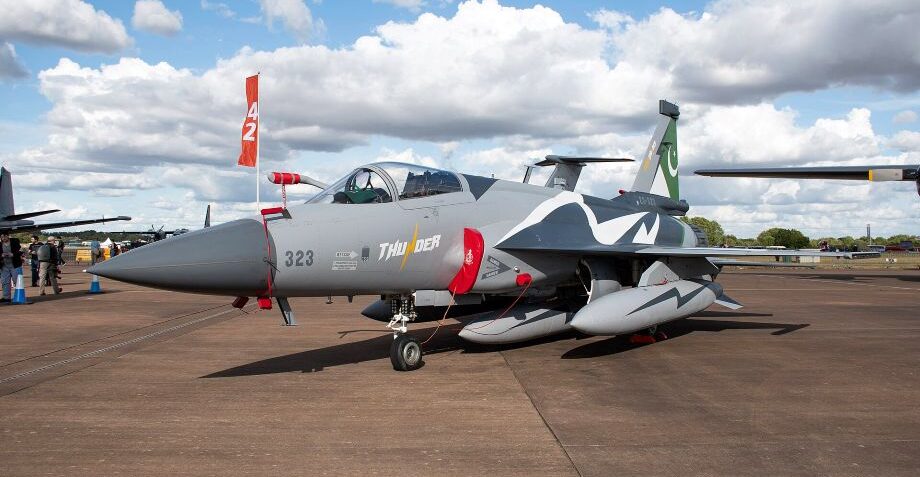
The Fa’az programme is also associated with Pakistan’s wider efforts to expand its domestic defence manufacturing sector and strengthen the capabilities of its fighter aircraft fleet, including the JF-17 Thunder. However, the Pakistani military has not officially disclosed the launch platform used during the November 3 test or confirmed the missile configuration involved.
Details regarding the missile’s operational range, maximum speed, engagement envelope and production timeline also remain undisclosed. Although previously displayed GIDS specifications have indicated a projected range exceeding 100 kilometres and a maximum speed of Mach 3.5, these figures have not been independently confirmed through the latest flight-test announcement.
The successful test represents an important step in Pakistan’s efforts to develop advanced indigenous airborne weapons. Further flight trials, technical validation and aircraft integration will be important in determining the missile’s operational readiness and its eventual role within the Pakistan Air Force.