


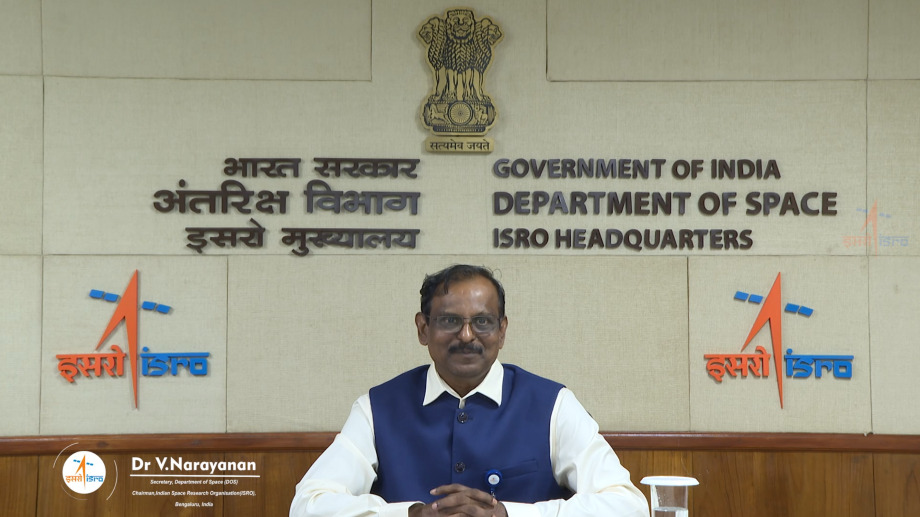
ISRO Chairman Dr. V. Narayanan inaugurated the ninth edition of the Bengaluru Space Expo (BSX) 2026, highlighting the growing importance of collaboration between the Indian Space Research Organisation, private industry, startups and academia as India seeks to expand its space capabilities. The three-day event, held from September 7 to 9 at the Bangalore International Exhibition Centre, brought together representatives from the space industry, government, international organisations, startups and research institutions.
Addressing the inaugural session, Narayanan said the scale of India’s future space requirements cannot be met by ISRO alone. He pointed to the country’s increasing demand for satellites and launch services and called for greater participation from Indian companies, startups and academic institutions to build the capabilities required for the next phase of India’s space programme.
Narayanan said India currently needs to significantly increase its launch frequency. While ISRO has progressed from conducting launches at intervals of several years to carrying out missions at a much faster pace, the national requirement is estimated at around 50 launches annually. Meeting that requirement, he stressed, will require the combined efforts of government institutions and the wider space ecosystem.
The ISRO chief also addressed concerns surrounding the increasing participation of private companies in the space sector. He made clear that ISRO is not being privatised and that the organisation will continue to play a central role in advanced space research, technology development, national and strategic missions, space science and exploration. ISRO separately stated that private-sector participation is intended to allow the organisation to concentrate more strongly on next-generation capabilities while industry scales up mature technologies.
India’s space-sector reforms have resulted in rapid growth in private participation. According to discussions at the expo, the country has expanded from a very small private space startup ecosystem a decade ago to more than 450 space startups today. IN-SPACe Chairman Pawan Goenka said private investment is also increasing, reflecting the growing confidence of investors and companies in India’s space economy.
The collaboration between ISRO and industry is already visible across launch vehicles, satellite technologies and other space-related capabilities. Companies are increasingly participating in manufacturing and technology development, while organisations such as IN-SPACe and NewSpace India Limited are helping strengthen the wider commercial space ecosystem.
The Bengaluru Space Expo also provided a platform for discussions on space commercialisation, sustainability, international cooperation and emerging technologies. International participation further highlighted India’s growing role in the global space sector, with countries and companies exploring opportunities for partnerships in areas ranging from satellite systems to launch services and space technology.
The event comes at a time when India is seeking to expand its presence across the global space economy while developing advanced capabilities for future missions. With increasing demand for satellites, launch services and space-based applications, the government, ISRO, private industry and academia are expected to play complementary roles in building India’s next generation of space capabilities.