


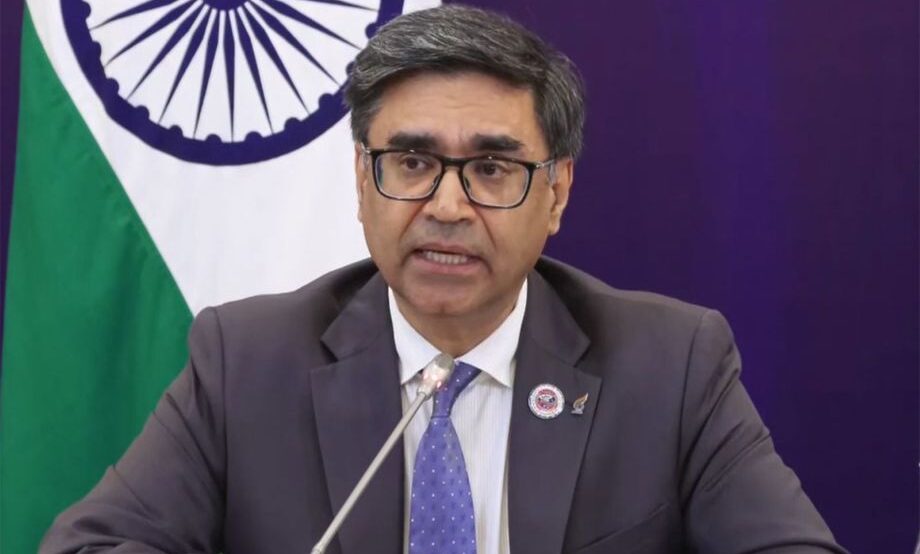
India is stepping up diplomatic efforts to secure a sustainable future for its involvement in Iran’s strategically important Chabahar Port, with Foreign Secretary Vikram Misri confirming that New Delhi remains in contact with key stakeholders over the project.
Misri made the remarks in Bishkek following Prime Minister Narendra Modi’s bilateral meeting with Iranian President Masoud Pezeshkian on the sidelines of the Shanghai Cooperation Organisation (SCO) summit. He said India’s engagement with Chabahar has been longstanding, but the conflict in West Asia and changes in the regulatory environment have complicated cooperation around the port.
India’s continued focus on Chabahar reflects the port’s wider strategic importance. Located on Iran’s southeastern coast, Chabahar provides India with an important connectivity route toward Afghanistan and Central Asia while reducing dependence on routes passing through Pakistan. The facility also forms part of New Delhi’s broader regional connectivity objectives, including its interests linked to the International North-South Transport Corridor.
The latest diplomatic push comes as tensions across West Asia have disrupted regional trade, transport and maritime activity. India has also raised concerns over attacks on commercial vessels in regional waters, with some incidents resulting in the deaths of Indian seafarers. During the Modi-Pezeshkian meeting, India stressed the importance of freedom of navigation and the protection of civilians, commercial shipping and seafarers.
US sanctions and the broader financial environment have added another layer of uncertainty for businesses dealing with Iran. Despite these challenges, India and Iran continue to maintain commercial links, with much of the current trade being handled by private entities adapting to international financial and sanctions-related constraints.
During the meeting, President Pezeshkian also acknowledged India’s engagement on regional peace and stability. Foreign Secretary Misri said Prime Minister Modi has remained in contact with regional and global leaders since the escalation of the conflict, while External Affairs Minister S. Jaishankar has continued discussions with regional counterparts on possible avenues for de-escalation and peace.
For New Delhi, keeping Chabahar viable is not only an infrastructure issue but also a strategic connectivity and maritime-security priority. The port has the potential to strengthen India’s access to landlocked markets in Central Asia, support trade with Afghanistan and reinforce its role in regional transport networks.
India’s latest position indicates that it does not intend to step away from Chabahar despite the difficult geopolitical environment. Instead, New Delhi is seeking a workable arrangement with relevant stakeholders that can preserve the project’s long-term economic and strategic value while taking account of evolving international regulations and regional security conditions.