


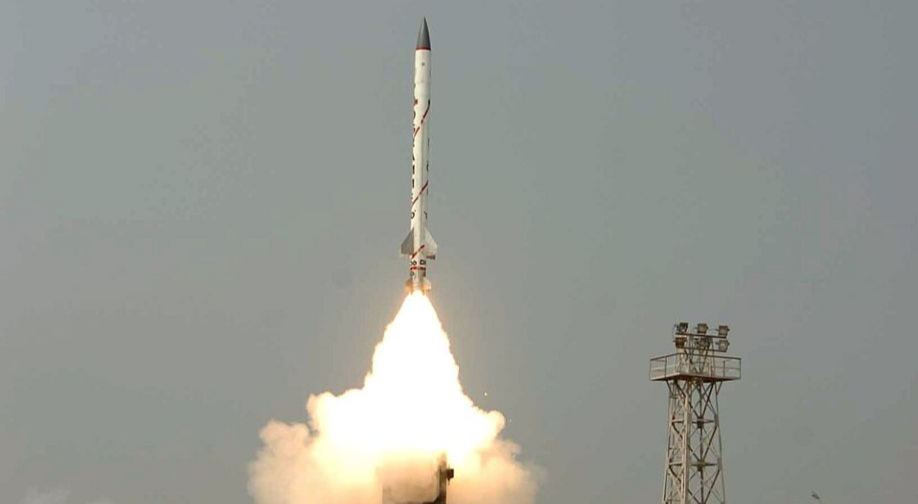
DRDO’s Research Centre Imarat (RCI) in Hyderabad has issued a tender for the fabrication of five sets of 370 mm Extended Long Range Guided Rocket (ELRGR) motor systems. The development points to India’s continuing efforts to expand the range and precision of its indigenous rocket artillery capabilities beyond existing Pinaka-family systems.
According to the tender details reported by Indian Defence News, the work involves several specialised manufacturing processes, including flow forming, precision machining, welding of 11-10 PH steel and proof-pressure testing of the rocket motor systems. The delivery period has been specified as six months on an FOR RCI basis.
The 370 mm ELRGR is associated with DRDO’s efforts to develop a new generation of extended-range guided rockets. Its larger calibre compared with the 214 mm Pinaka family indicates a design intended to support greater propulsion and payload capacity. However, publicly available information does not yet establish an official operational range for the system, so reported figures for a potential 200 km or 300 km-class capability should be treated as projections rather than confirmed specifications.
The tender is significant because rocket motor fabrication is a critical part of the development and testing process for long-range guided rockets. The specified manufacturing requirements, particularly the use of specialised steel and proof-pressure testing, indicate the need for high levels of structural strength and manufacturing precision to withstand the demanding conditions experienced during rocket flight.
The programme also reflects the growing role of Indian industry in advanced defence manufacturing. By inviting industry participation for specialised fabrication and testing activities, RCI can build domestic production capabilities for complex rocket propulsion components while supporting the broader objective of reducing dependence on foreign suppliers.
The development comes as India continues to improve the reach and accuracy of its indigenous artillery and rocket systems. The Pinaka family has already evolved through several guided and extended-range variants, and the ELRGR could represent a further step toward providing the Indian Army with longer-range precision strike options.
At this stage, the tender should be viewed as an important development in the ELRGR programme rather than confirmation of the system’s final specifications or induction timeline. Further trials and official disclosures will be required to establish its final range, warhead configuration, guidance architecture and operational status.