


India is moving ahead with an ambitious plan to make five indigenous Small Modular Reactors (SMRs) operational by 2033, marking a major step toward strengthening the country’s long-term energy security and expanding its clean electricity generation capacity.
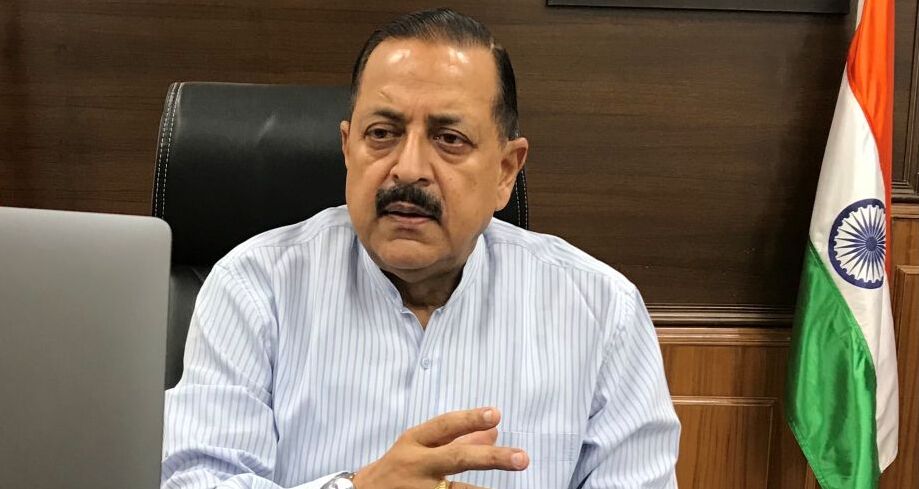
Minister of State in the Department of Atomic Energy, Dr. Jitendra Singh, informed the Lok Sabha that the government is targeting the commissioning of five indigenous Small Modular Reactors by 2033. He stated that the programme is part of India’s broader strategy to expand nuclear energy through domestically developed technologies and meet the country’s growing demand for clean and reliable power.
The initiative is part of the government’s broader strategy to diversify India’s energy mix while reducing dependence on fossil fuels. Unlike conventional nuclear plants, Small Modular Reactors are designed to be more compact, require less land, and can be deployed in phases, making them suitable for industrial clusters, remote regions, and areas with increasing electricity demand.
The reactors are being developed using indigenous technology by the Department of Atomic Energy (DAE) and the Bhabha Atomic Research Centre (BARC). Among the key projects are the Bharat Small Modular Reactor (BSMR), a compact 55 MW Small Modular Reactor, and a High Temperature Gas-Cooled Reactor, which is expected to support industrial applications such as hydrogen production alongside electricity generation.
Officials believe the programme will demonstrate India’s growing capability to design, develop, and manufacture advanced nuclear systems domestically while supporting the country’s vision of technological self-reliance under the Atmanirbhar Bharat initiative.
The government’s focus on SMRs comes as electricity demand continues to rise due to industrial expansion, urbanisation, digital infrastructure, and the transition toward cleaner energy sources. Unlike renewable energy sources that depend on weather conditions, nuclear power can provide stable, round-the-clock electricity, making it an important component of India’s future energy mix.
Experts believe the successful deployment of indigenous SMRs could strengthen India’s nuclear manufacturing ecosystem, encourage domestic production of specialised components, and create opportunities for future technology exports. The modular nature of these reactors is also expected to reduce construction timelines and improve deployment flexibility compared to conventional nuclear power plants.
If the target is achieved, the commissioning of five indigenous Small Modular Reactors by 2033 will mark a significant milestone in India’s clean energy journey, reinforcing energy security while expanding the country’s nuclear power capabilities through homegrown technology.