

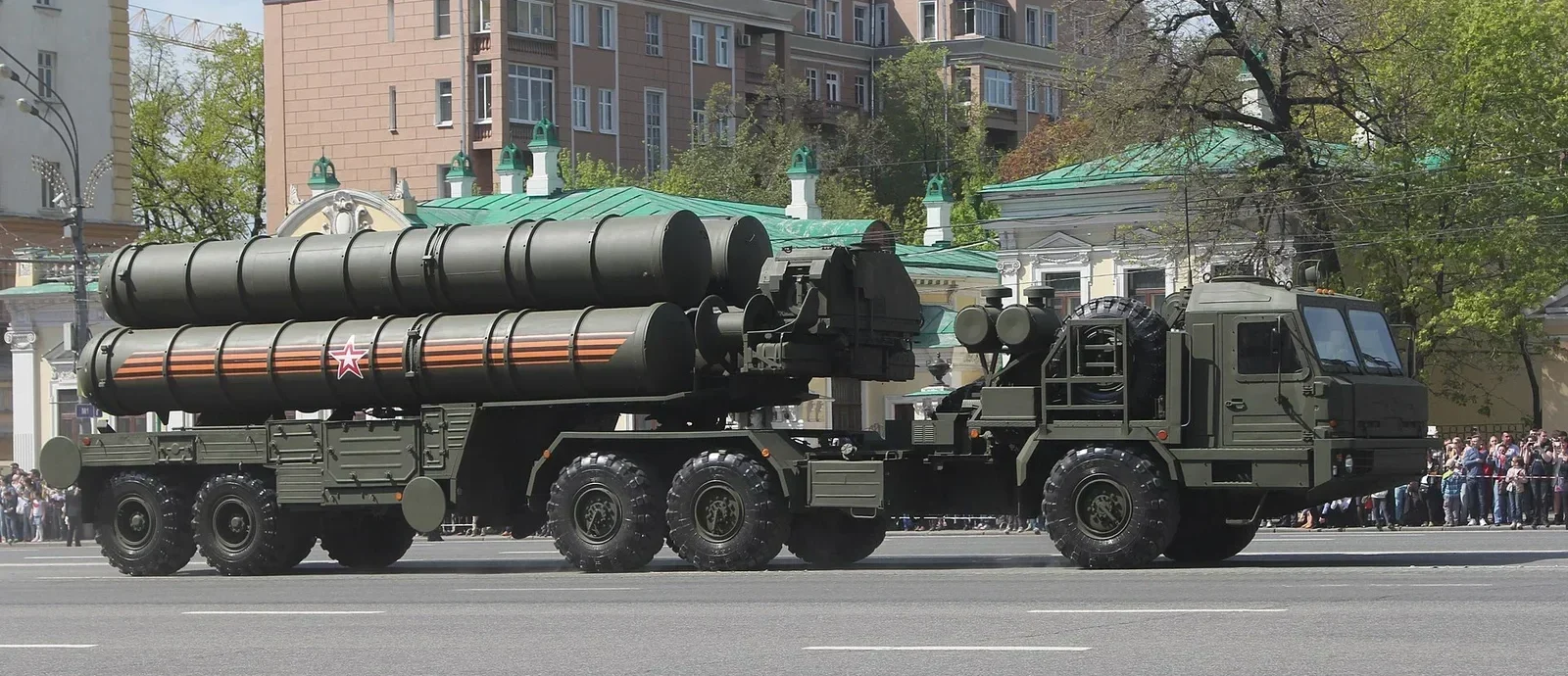
India is expanding its air defence posture by deploying ten squadrons of the S-400 Triumf surface-to-air missile system, according to defence sources. The integration marks a significant strengthening of the country’s integrated air defence architecture across multiple theatres.
The S-400 Triumf is a long-range, multi-target capable system developed by Russia’s Almaz-Antey. Each squadron comprises six launcher units, radar control stations, and command centres capable of engaging aircraft, cruise missiles, and ballistic targets at ranges up to 400 kilometres depending on the variant deployed.
India signed its first contract for S-400 systems in 2015, with the initial deliveries beginning in 2021. The first regiment became operational with the Indian Air Force in April 2022, based in the western theatre. The system operates alongside India’s indigenous air defence network, including the Akash missile family and the under-development Medium Range Surface-to-Air Missile (MRSAM).
The ten-squadron expansion represents a substantial commitment to modern air defence infrastructure. At full strength, this deployment would provide layered coverage across critical air corridors and strategic installations, addressing gaps in India’s existing air defence grid that relied historically on older Soviet-era systems like the S-75 Dvina and S-125 Neva.
The S-400’s phased array radar, known as the 91N6 series, offers simultaneous multi-target engagement capability and operates effectively against stealth aircraft and hypersonic threats. India’s air defence doctrine increasingly emphasises networked, multi-layered defence at strategic, operational, and tactical levels, with the S-400 anchoring the strategic tier.
The deployment aligns with India’s broader military modernisation against perceived threats in the South Asian and Indian Ocean contexts. The Indian Air Force has integrated S-400 data feeds into its air operations centre architecture, enabling real-time threat assessment and coordinated responses across air defence assets.
Operationalisation of ten squadrons will require trained crews, spare parts ecosystems, and sustained logistics infrastructure. India has been developing indigenous expertise through technology transfer clauses in its purchase agreements, though operational systems remain dependent on Russian technical support and component supply chains.
The expansion demonstrates India’s confidence in the platform’s operational utility following initial deployment experience. It reflects a strategic calculus that modern air defence density, rather than relying solely on interceptor aircraft, provides more effective coverage against emerging aerial threats including unmanned systems and hypersonic weapons.