


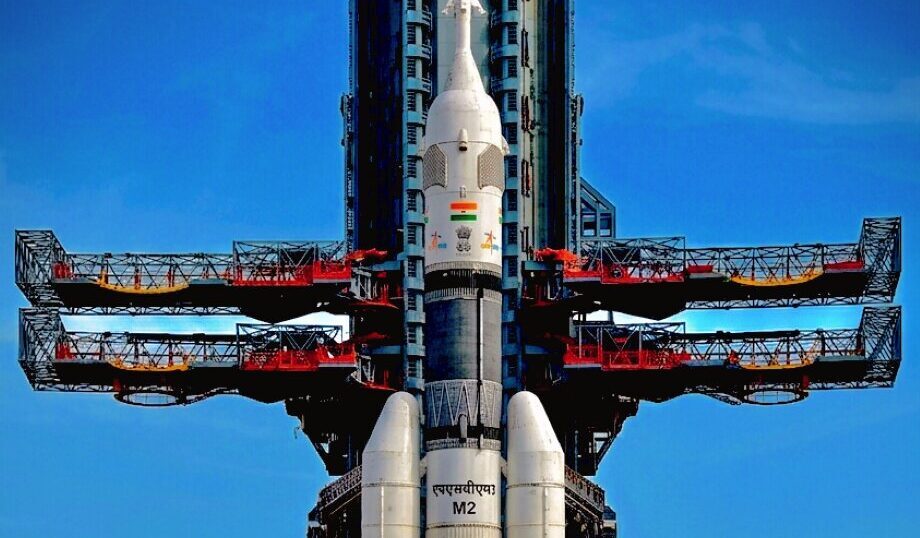
India’s ambitious Gaganyaan human spaceflight programme is approaching a critical testing phase, but the first uncrewed orbital mission may take longer than initially expected. The Gaganyaan-G1 mission, which was earlier targeted for December 2026, could now be delayed until February 2027 as the Indian Space Research Organisation (ISRO) continues additional technical evaluations and simulation exercises.
ISRO Chairman Dr V. Narayanan had previously indicated that the first uncrewed flight would take place in December 2026. The mission is designed to demonstrate India’s ability to launch and recover a spacecraft configured for human spaceflight, marking an important step towards sending Indian astronauts into low-Earth orbit independently.
However, a November 20 report by India Today, citing senior officials familiar with developments at ISRO’s Human Space Flight Centre and UR Rao Satellite Centre, indicated that the mission may not take place before February 2027. Although approximately 80 per cent of the work has reportedly been completed, certain critical validation activities and technical assessments remain outstanding.
The extended preparation period reflects the demanding safety requirements associated with a human-rated space programme. Unlike conventional satellite missions, Gaganyaan requires the successful integration and verification of several interconnected systems that must operate reliably throughout launch, orbital flight, atmospheric re-entry and recovery.
The Gaganyaan-G1 flight will be conducted using the Human Rated Launch Vehicle Mark-3 (HLVM3), a modified version of ISRO’s LVM3 rocket developed specifically for human spaceflight requirements. The rocket will carry the Crew Module and Service Module into orbit from the Satish Dhawan Space Centre in Sriharikota.
An important objective of the mission is to assess the performance of the spacecraft’s critical systems in the space environment. The Crew Module is designed to eventually accommodate astronauts, while the Service Module will provide essential support during orbital operations. The flight will also help validate spacecraft separation, navigation, communication, thermal protection and recovery technologies.
ISRO has developed Vyommitra, a half-humanoid robotic astronaut, for the uncrewed Gaganyaan test programme. The robotic system is intended to simulate selected human functions and help engineers evaluate cabin conditions, environmental control systems and other technologies required for future crewed operations. The first uncrewed mission has been planned to carry Vyommitra as part of this validation effort.
India’s human spaceflight programme has already achieved several important technical milestones. The Test Vehicle Demonstration-1 (TV-D1) mission successfully demonstrated the performance of the Crew Escape System, an essential safety arrangement designed to move the crew module away from the launch vehicle during an emergency. ISRO has also completed integrated air-drop tests to validate the parachute-based deceleration and recovery arrangements of the Crew Module.
In addition, the development and ground testing of the propulsion stages and structures of the human-rated launch vehicle have been completed. Other important programme components include the Environmental Control and Life Support System, Thermal Protection System, Crew Module propulsion, avionics and crew recovery infrastructure.
The Government had earlier outlined the programme’s progress in a written statement in the Rajya Sabha on August 6, 2026. Union Minister of State for Science and Technology Dr Jitendra Singh said the first uncrewed experimental mission carrying Vyommitra was targeted for the fourth quarter of 2026. He also confirmed that two additional uncrewed missions were planned before India’s first crewed orbital flight.
The Gaganyaan programme has experienced multiple schedule revisions since its approval, reflecting the complexity of developing indigenous technologies for human spaceflight. ISRO is required to demonstrate the reliability of the launch vehicle, spacecraft, emergency escape arrangements and recovery systems before placing astronauts aboard an Indian rocket.
The first uncrewed flight will therefore serve as a major demonstration of the country’s integrated human spaceflight capabilities. Its successful completion will provide important operational experience and technical data for subsequent missions.
If the latest reported schedule assessment leads to a February 2027 launch, it would represent another adjustment to the programme’s timeline. Nevertheless, the additional preparation is significant for a mission in which astronaut safety will ultimately depend on the performance of every critical spacecraft and launch system.
Gaganyaan remains one of India’s most important national space ambitions, with the long-term objective of establishing an independent capability to send Indian astronauts into low-Earth orbit and return them safely to Earth. The completion of its uncrewed demonstration missions will be a decisive step towards achieving that goal.